

CIP: Secure Asset Accumulation for Retirees with Minimal Investment Risk
B2B, SaaS, Wealth and Asset Management, Web application, Client Investment Portal, 2020.
I. Introduction
Overview
Advanced Time Segmentation stands as a leading solution in financial planning. This platform offers a holistic approach to wealth management, combining cutting-edge financial tools with personalised services. CIP is designed to make sophisticated investment strategies accessible to the ultra-wealthy and a broader audience of investors.
The Goal
The primary goal of CIP within the ATS platform is to harmonise clients’ assets with their financial liabilities and income, supported by professional guidance from a dedicated ATS financial advisor. This integration aims to simplify complex investment activities and enhance financial clarity and strategy accessibility for all client segments.
My Role and Responsibilities
As the Lead Product Designer, my responsibilities encompass conducting comprehensive industry research, developing competitor and market analysis frameworks, engaging directly with target audiences, and validating hypotheses. I am tasked with aligning the design strategies with product goals, ensuring an intuitive user interface, testing the designs, incorporating user feedback into iterative design improvements, advocating for user-centred design principles, and facilitating cross-departmental collaboration.
II. The Challenge
UX Problem Statements
-
Financial planning processes are burdened by cumbersome paperwork.
-
Lack of transparency in investment operations.
-
The complexity of financial strategies, traditionally reserved for ultra-wealthy clients, is inaccessible to average investors.
-
Prevalence of outdated financial tools on investment platforms.
Business Problem Statements
-
Inefficient access to crucial financial information and tools.
-
Financial services often adopt a one-size-fits-all approach, disregarding individual client needs and circumstances.
-
Exclusion of a broader audience from optimised financial strategies due to existing service limitations.
III. Research and Analysis
Stakeholder Interviews
Insights from Interviews:
-
Stakeholders emphasised the need for customisable investment plans to accommodate diverse financial goals and risk tolerances among retirees.
-
There was a strong call for integrating real-time financial data feeds to enhance decision-making capabilities within the portal.
-
Stakeholders raised concerns about data security, especially regarding the sensitive financial information of retirees.
-
There was a consensus on the importance of seamlessly integrating advisory services within the portal to provide guided, personalised financial planning.
-
Stakeholders highlighted the necessity of creating an accessible platform for users with varying levels of technological and financial literacy.
Key Questions and Answers:
-
Q: How can the portal improve the investment experience for retirees?
A: By simplifying the user interface and providing educational tools that demystify investment strategies. -
Q: What are the primary security features needed for CIP?
A: End-to-end encryption, multi-factor authentication, and continuous monitoring of transactions. -
Q: In what ways should CIP customise its offerings?
A: Through adjustable risk profiles and the ability to personalise investment timelines and goals. -
Q: How important is mobile access to our stakeholders?
A: Extremely important—many stakeholders emphasise the need for a fully responsive design that supports mobile devices. -
Q: What analytics tools do stakeholders expect in the portal?
A: Dashboards with real-time data, predictive analytics, and scenario planning tools. -
Q: How can we address the complexity of financial terms and strategies for users?
A: By incorporating interactive educational modules and glossaries that explain terms and concepts in layman’s terms. -
Q: What feedback mechanisms should be integrated into the portal?
A: Real-time surveys and feedback forms that are easy to access and use. -
Q: What are the top priorities for integrating third-party services?
A: Secure API integrations with leading financial data providers and banks. -
Q: How can we ensure the platform meets regulatory compliance?
A: Regular audits, adherence to financial regulations, and collaboration with legal experts to ensure compliance. -
Q: What are the expectations regarding the time to market for CIP?
A: The development should align with financial cycles, preferably launching in a low-activity period to allow users to acclimate to the new system.
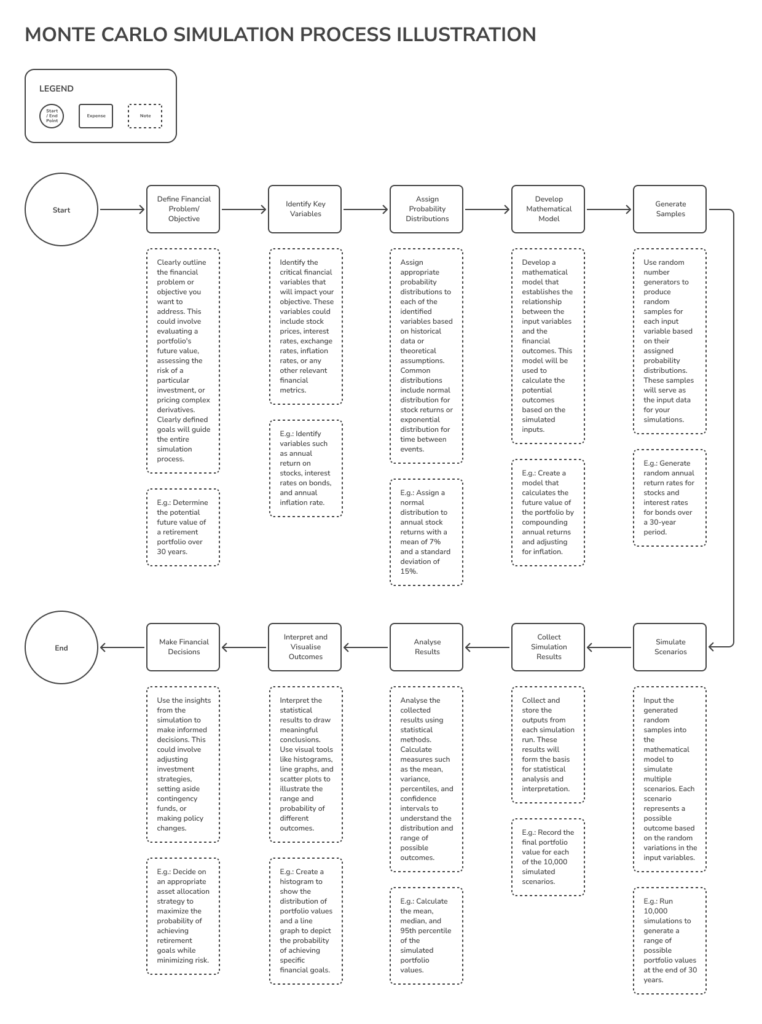
Monte Carlo Simulation in Finance
To represent the Monte Carlo Simulation as a user flow chart, here’s a step-by-step description suitable for illustrating the user interactions within a financial application:
User Research
Insights from Interviews:
-
Many users expressed a need for a significantly simplified user interface, as they often feel overwhelmed by complex financial data and terms.
-
Users frequently mentioned their concerns about the security of their financial information, emphasising the importance of robust security features.
-
There was a strong desire for personalised financial advice that aligned with individual retirement goals and risk tolerance.
-
Users highlighted the need for the platform to be accessible on multiple devices, particularly on tablets and smartphones, which they use frequently.
-
Users appreciated prompt and clear support, whether through digital channels or direct human contact, to assist with their queries and concerns.
Key Questions and Answers:
-
Q: What are the main challenges you face when using financial planning tools?
A: “I find them too complex and cluttered with information that doesn’t seem relevant to my personal needs.” -
Q: How important is the security of your financial data when using online platforms?
A: “Extremely important. I need to know that my financial information is secure and protected at all times.” -
Q: What features do you look for in a financial management tool?
A: “I look for tools that can be customised to my personal financial situation and that give clear, actionable advice.” -
Q: How do you prefer to interact with financial tools? Through a computer, tablet, or smartphone?
A: “I mainly use my tablet because it’s convenient, but I expect the tool to work well on my smartphone, too.” -
Q: Would you value having direct access to a financial advisor through the platform?
A: “Yes, it would make a big difference to have expert advice readily available when I need it.”
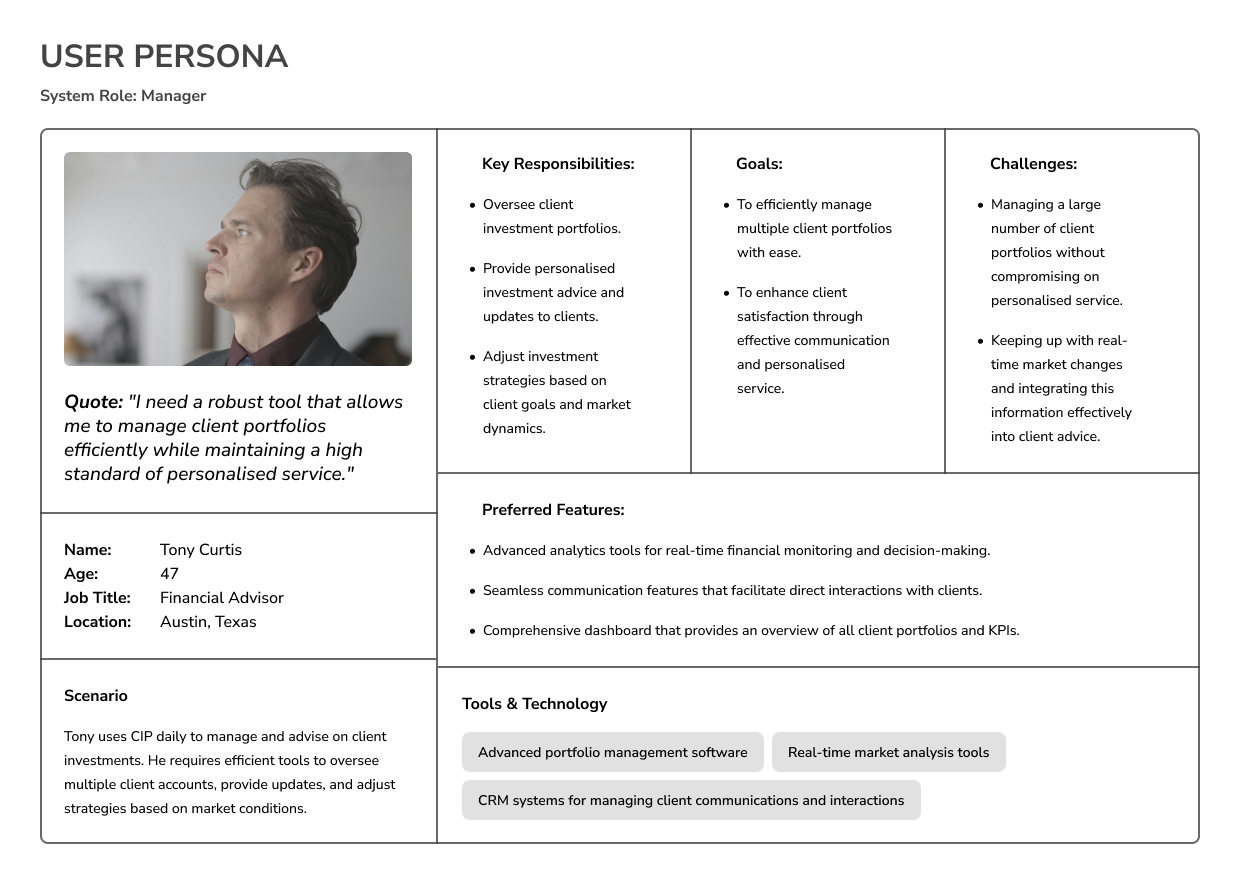
User Persona Introduction
The following user persona represents Tony, a financial advisor at LUCIA Capital Group, who directly interacts with CIP as part of his daily responsibilities. Creating a persona for Tony helps the development team understand the specific needs of internal stakeholders who facilitate client interactions and financial management.
Market and Competitors
Analysis of Key Competitors
The analysis revealed that while many competitors offer generic investment platforms, ATS differentiates itself by focusing specifically on retirees and their unique financial needs. Competitors like Vanguard and Fidelity typically target a broad audience, which can dilute the specificity and effectiveness of their advice for retirees. ATS stands out by offering customised investment strategies, leveraging both cutting-edge technology and human expertise, tailored specifically for post-retirement financial planning.
Market Trends
The current trend in wealth management emphasises digital transformation and personalised service. There’s a growing demand for platforms that not only provide traditional asset management but also incorporate advanced analytics to predict market trends and offer bespoke advice.
CIPis designed to address these trends by integrating real-time data analysis and personalised user experiences, ensuring that retirees have robust, forward-looking tools at their disposal.
Impact of Research and Analytics
The insights gained from our extensive market and competitor analysis, along with direct feedback from user research, significantly shaped the design of CIP. For instance, the highlighted need for simplicity and accessibility in user interviews led to the development of an intuitive user interface that simplifies complex financial information. Additionally, recognising a trend towards mobile usage among retirees influenced our decision to ensure that the portal is optimised for tablets and smartphones, facilitating on-the-go access. The competitive analysis underscored the need for a differentiated offering, which incorporated advanced features like scenario-based planning tools and personalised financial snapshots, setting ATS apart in a crowded marketplace.
IV. Integrated Design Process and Solution
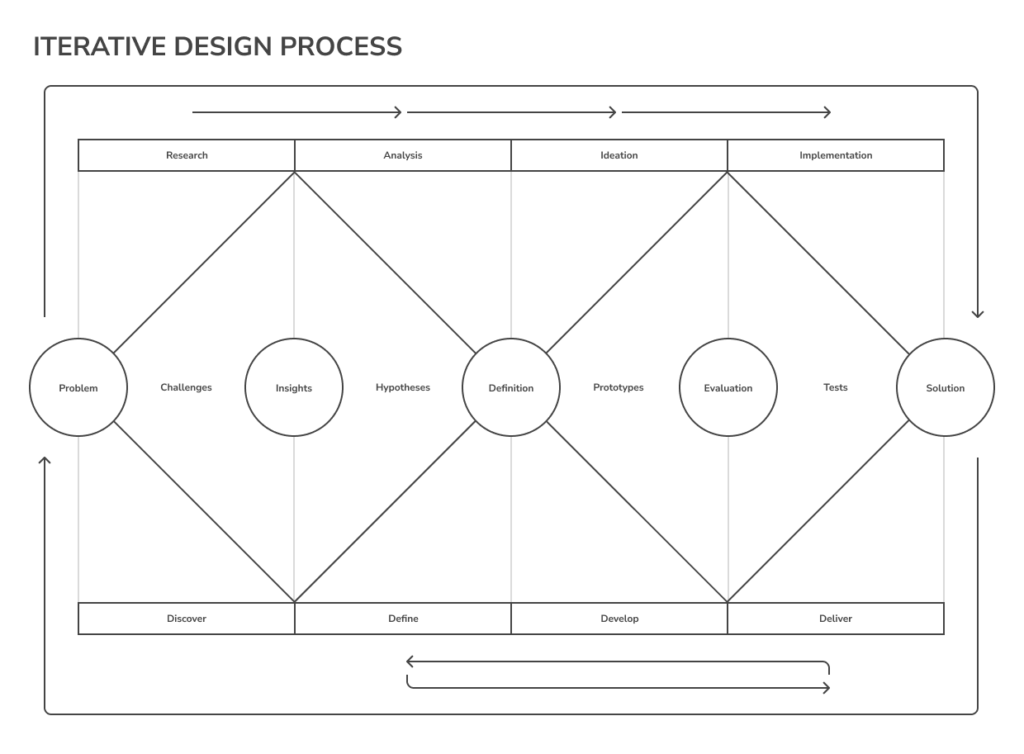
Design Process
The design process adhered to a disciplined Double Diamond Model, focusing on diverging and converging stages both for discovering and defining the problem and then developing and delivering the solution.
User Feedback Incorporation
Continuous user testing sessions were integral at each phase. Adjustments were made based on metrics such as:
-
Usability Score. Initially, the usability score was 68 out of 100, indicating moderate difficulty for new users. Through iterative design improvements focusing on simplifying navigation and enhancing on-screen instructions, the score improved to 87, reflecting a significant enhancement in user ease of use.
-
Task Completion Time (TCT). In early tests, the average time taken by users to set up a new investment portfolio was 13 minutes it included 11 steps. After several iterations of streamlining the process and improving interface clarity, this was reduced to 8 minutes, and 8 steps, making the platform more efficient for users.
-
Error Rate. At the start of testing, the error rate was 17%, with users frequently entering incorrect information in investment allocation forms. Through redesigning form layouts and adding real-time validation and help tooltips, the error rate was reduced to 8%.
-
Net Promoter Score (NPS) and Customer Satisfaction (CSAT). The initial NPS was 62, which increased to 78 after implementing changes based on user feedback, indicating higher likelihood of users recommending the platform. Similarly, the CSAT improved from 67% to 86%, showing enhanced overall user satisfaction with the portal.
-
Return on Investment (ROI). The initial ROI analysis showed a 17% reduction in time spent by financial advisors managing client portfolios due to more efficient data handling and user interface. This time saving translates to an estimated annual cost saving of approximately $150K for a medium-sized financial advisory firm, underscoring the economic impact of the portal.
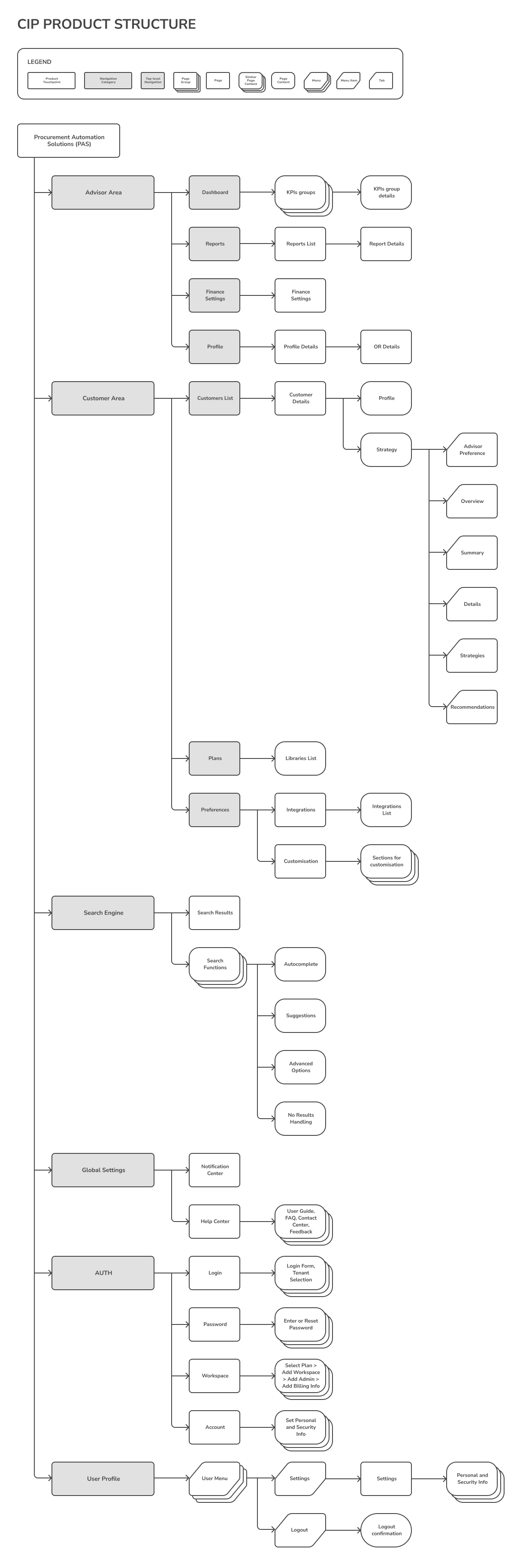
Module Structure
The Information Architecture was crafted with a focus on taxonomy, navigation, and functionality. This structure is pivotal for ensuring that CIP is intuitive and aligns with user mental models, facilitating easy access to information and tools.
The Information Architecture was designed to ensure clarity in navigation and ease of accessing functions. This included:
-
A clear taxonomy categorising investment information, tools, and user support features.
-
Logical navigation paths that reduce the number of steps a user must take to perform common tasks.
-
Functional structuring that aligns with typical user workflows, enhancing the overall user experience by minimising complexity and maximising efficiency.
Final Design
The design phase culminated in the creation of high-fidelity mockups that embody all the insights gathered through research and testing. These mockups represent the aesthetic and functional aspirations of CIP and are a direct reflection of the user-centric design approach.
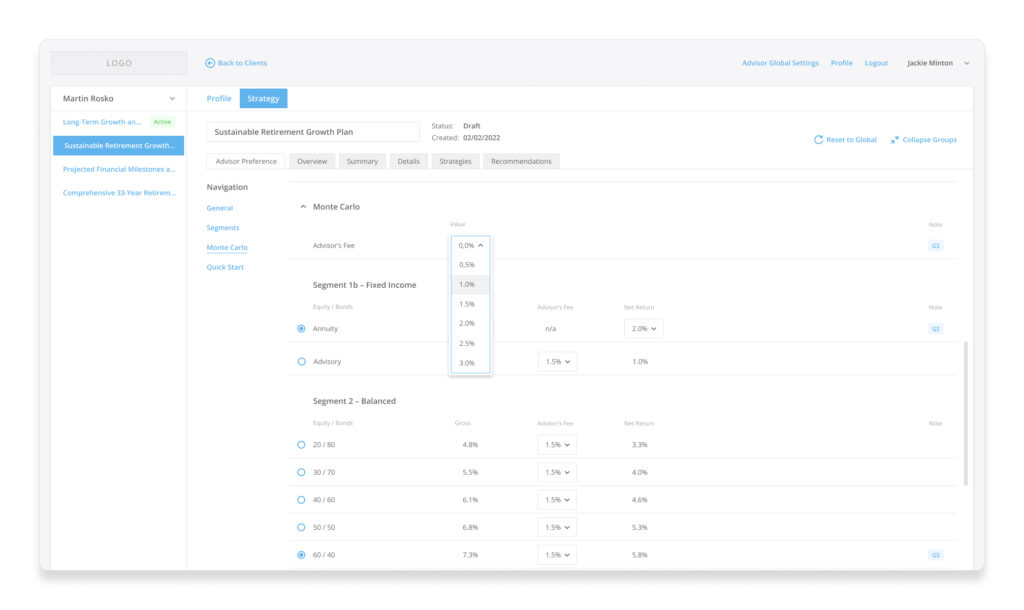
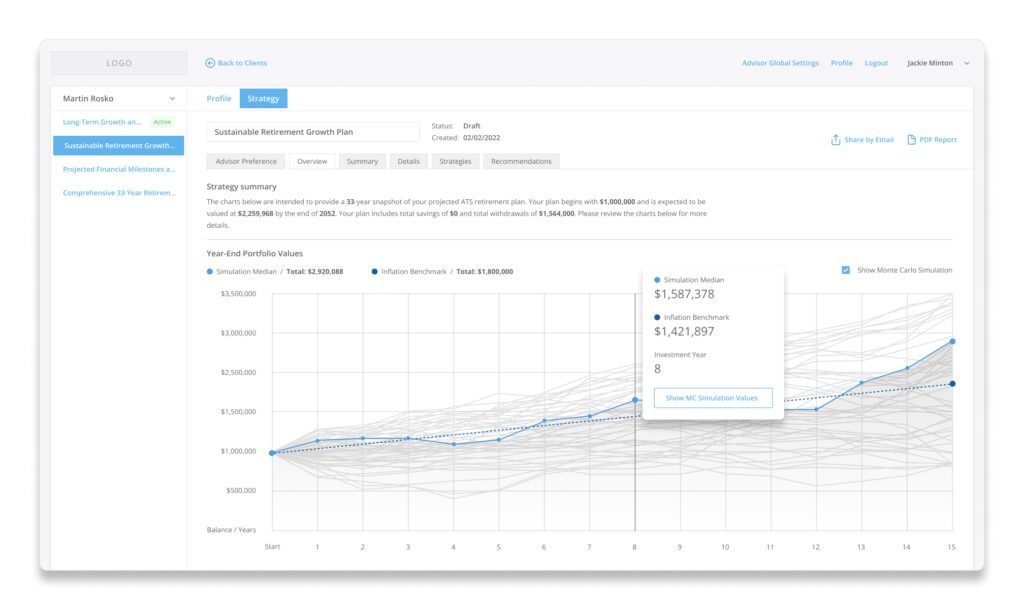
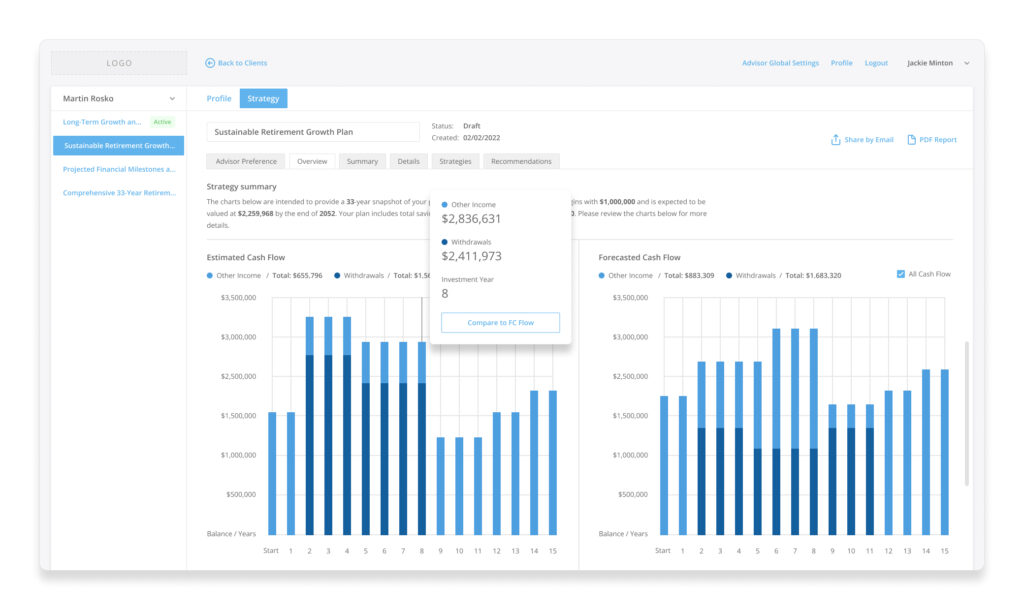
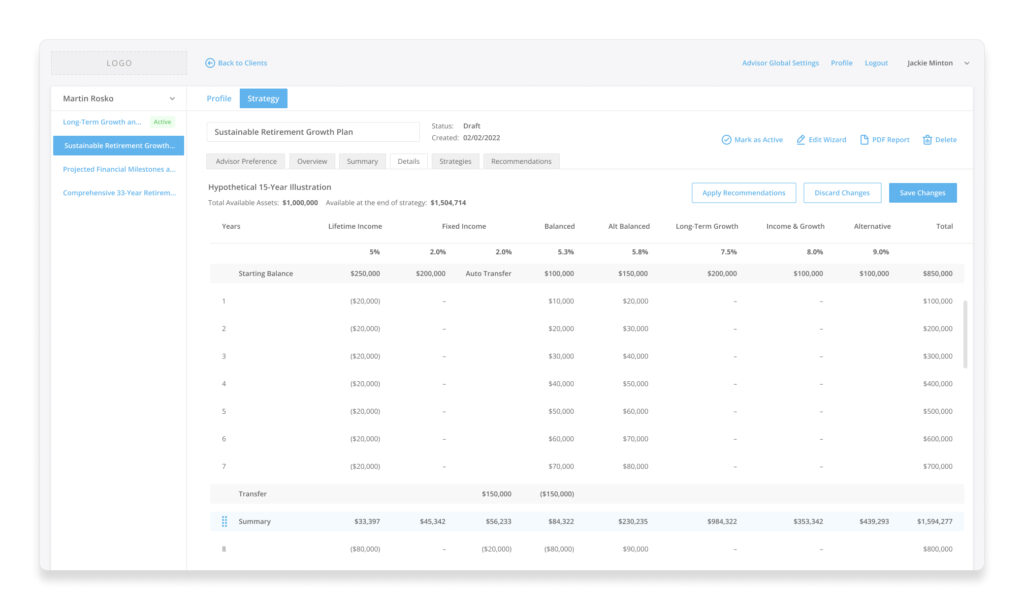
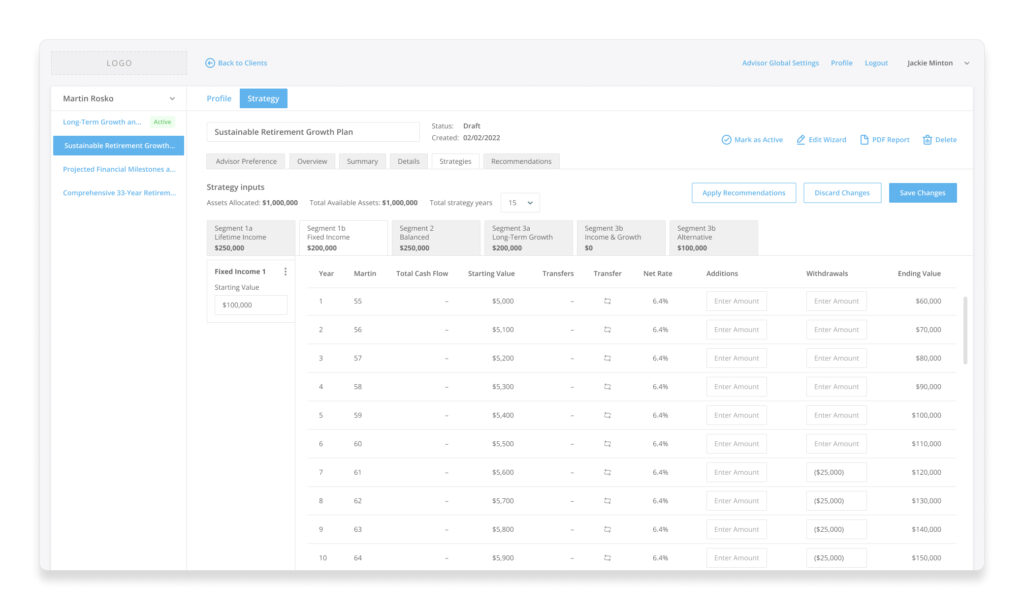
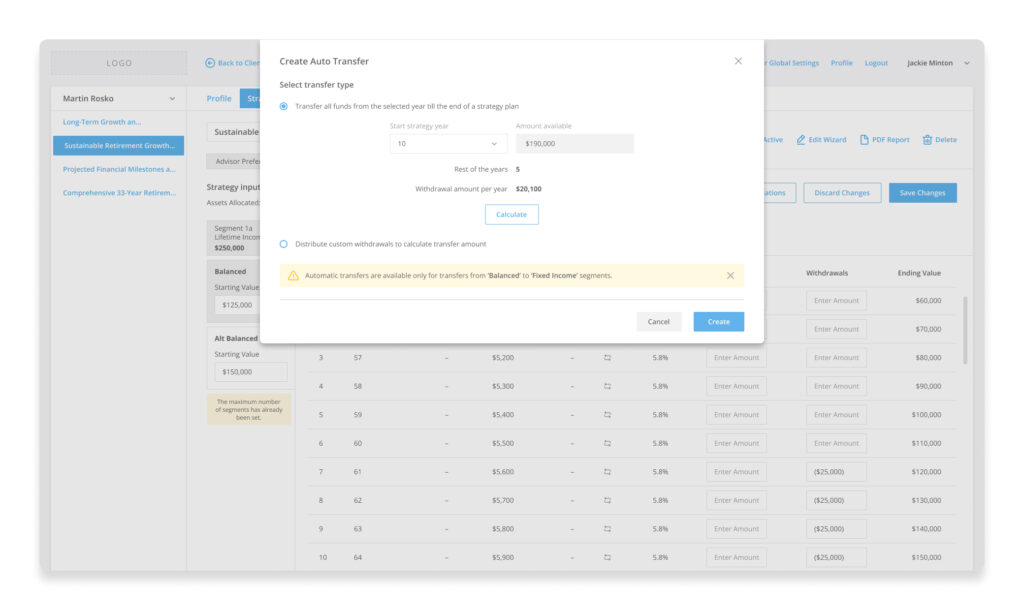
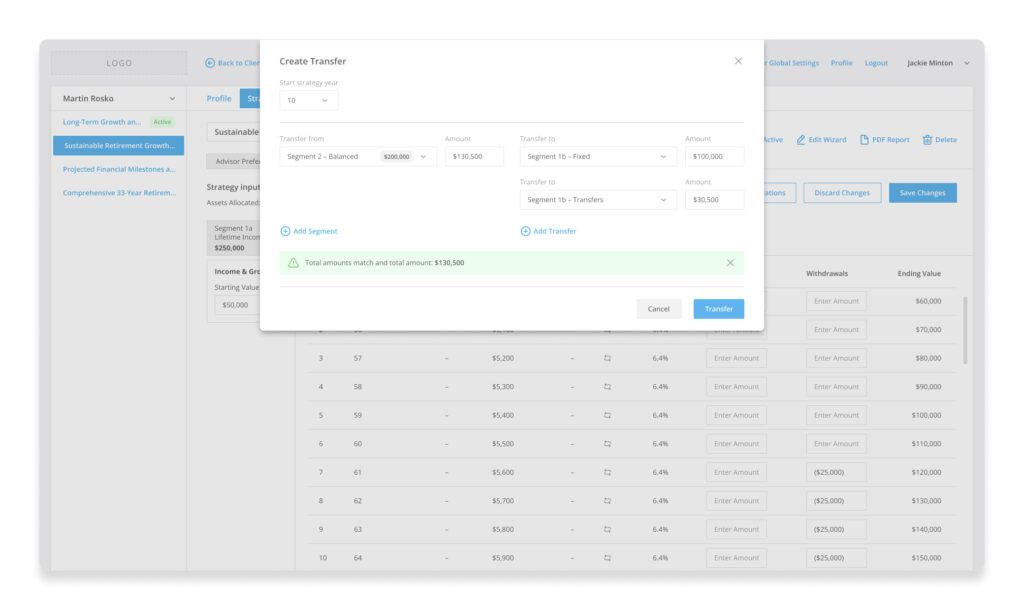
The final design showcases a sophisticated yet accessible interface, characterized by a modern aesthetic that respects the preferences and needs of retirees. The use of contrast, typography, and spacing was carefully considered to enhance readability and navigability.
Technical Challenges Overcome
-
Integration Complexity—seamlessly integrating real-time financial data feeds posed significant challenges. The solution involved using advanced APIs and ensuring robust backend processing.
-
Scalability—the platform needed to handle a growing number of users without degradation in performance. This was addressed through cloud solutions that allow scalable resource allocation.
-
Data Security—high standards of data protection were required. Implemented end-to-end encryption and advanced security protocols.
-
Cross-Platform Compatibility—ensuring the portal’s functionality across different devices was challenging. Responsive design principles were applied to address this.
-
Regulatory Compliance—navigating the complex financial regulations affect design decisions. Worked closely with compliance experts to ensure all features adhered to legal standards.
V. Impact and Outcomes
Business Impact
-
Client Retention Rate. The portal contributed to an 11% increase in client retention rates based on the last 6 months after launch, which can be attributed to improved client engagement and satisfaction.
-
Advisor Efficiency. Financial advisors reported a 42% decrease in time spent on administrative tasks, allowing more time for client interaction and strategy development.
-
New Client Acquisition. Enhanced portal features and user satisfaction led to a 14% growth in new client acquisitions, as existing clients were more likely to refer the service to peers.
User Impact
-
User Satisfaction. Post-implementation surveys indicated a user satisfaction rate of 86%, a substantial improvement from the pre-launch figures.
-
Usability Enhancements. Following iterative design improvements, the platform reduced user-reported issues from an average of 1.7 per session to 0.3, indicating a smoother, more intuitive user experience.
-
Accessibility Improvements. Accessibility scores improved, making the portal more usable for clients with varying degrees of tech-savviness and physical abilities, crucial for the retiree demographic.
Lessons Learned
-
User-Centric Design is Crucial. The direct correlation between user satisfaction and business metrics like retention and acquisition rates emphasised the importance of a user-centred approach in design.
-
Iterative Testing Pays Off. Continuous user testing throughout the design and development phases allowed for real-time feedback and agile responses to issues, significantly improving the final product.
-
Cross-Department Collaboration Enhances Outcomes. Active collaboration between designers, developers, financial advisors, and compliance officers ensured that the portal not only looked good and functioned well but also met all regulatory requirements and aligned perfectly with business goals.
-
Scalability Considerations. Early planning for scalability prevented potential future disruptions as user numbers grew, underscoring the importance of foresight in technology projects.
-
Security as a Priority. The emphasis on robust security measures from the outset not only protected sensitive client data but also reinforced client trust in the platform.